

During one of my last game jams, I’ve met a participant that said he wanted to create a 3D Game because they were mature enough to continue with cheap pixel art aesthetics. I remember clearly I had to force myself to keep my poker face, because even though that guy was way more professional than me when it comes to gamedev, I can’t agree with his statement.
My love for videogames and later on passion for gamedev, started with pixels and I still fall in love faster with a videogame that is purely based on Pixel Art, that’s mainly why I keep learning and creating small games on PICO-8 because of the easiness creating good appealing sprites.
At this article I want to share my favourite Pixel Art references across books, Youtube channels and Patreon. But not only that, I want to show you my evolution since I started to this days, after 4 years, I’ve learned shapes, basic shadows and outlines mostly — It is a really long-term run to develop good design skills and of course, a lot of practise should be involved to keep learning and growing.
But how do you grow if you don’t start?
Let’s go!
How it started?
My interest on learning Pixel Art started by my trigger to learn gamedev, I was playing with some videogames engines back then, but I did not have any art capacity to create my own sprites, I though the personality of your game is completely connected to aesthetics, so I’ve just decided to learn on my own.
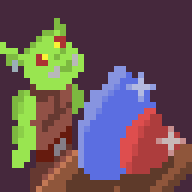
In February 2023, after 6 months learning on my own, I’ve decided to post my first Pixel art on lospec.com and of course, that wasn’t appealing back then. But I was already applying some shades and rules to my creations. I’ve decided improve my skills looking for the best content.
Reference #1 - Pixel Logic
I was looking for strong books covering most of the main aspects of Pixel Art and I can say I found it. You have a lot of information about Pixel Art if you start doing research and now it’s even better with AI because you can find articles and references faster.
But I wanted to have all the knowledge in one place an be able to take this digital book with me on the go. This is the content you can find:
Ch.0 - Introduction
Ch.1 - Line art
Ch.2 - Anti-aliasing
Ch.3 - Colours
Ch.4 - Readability
Ch.5 - Dithering
Ch.6 - Game perspectives
Ch.7 - Clean-up
Ch.8 - Subpixeling Ch.9 - Animation
I really recommend this book if you plan to start now, it is really entry-level oriented and it goes through the pillars of pixel art that can enable you to do more deep research later.
How it continued?
Well, let me show you some improvements after not only reading, but actually drawing for some time on Aseprite, my favorite Pixel Art editor.


Reference #2 - Final Fantasy
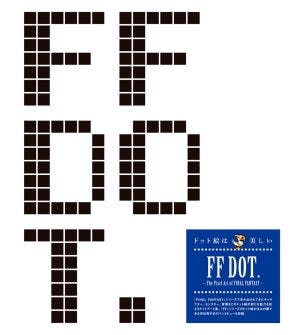
FF DOT. is absolutely a book that you can judge by it’s cover – minimalist, deliberate, clean, and a little bit whimsical. As you can imagine by the style of the cover, is just about the usage of palettes and pixels across the Final Fantasy saga from Final Fantasy I to Final Fantasy VI.
But the reason why I purchased this book some years ago was not only because I really like pixel art of Final Fantasy titles, but you have:
Palette used across sprites and maps
Size of the sprites
With that information you can attempt to do your own creations inspired by classic final fantasy titles. I really recommend this book for anyone willing to start with the basics.
Patreon
Patreon is a really good platform for artist to share their content and actually offer tutorials for potential customers.
Pedro Medeiros. Famours Pixel Art artist behind Celeste, no other information is needed, right?
Slynyrd. Minimalistic Pixel Art, usually executed under 8x8 sprites, which is super convinient for PICO-8.
Johan Peitz. He is not specialiced on Pixel Art, but he create really beautiful and playful games for PICO-8.
Youtube Channels
Saultoons. Really nice content about animations and Pixel Art in general
Indie Tales by AdamCYounis. He is a super talented pixel artist, really good tutorials and learning content and he is now at development of his own game.
Brandom James Geer. Another super talented pixel artist where you can learn about colors and small sized sprites.
How it is going now?


Gamedev is quite overwhelming, we can agree on that. After 11 years working as IT Service Manager, I can confirm gamedev is the most difficult challenge I’ve been dealing with, specially when you don’t know where to start.
But you found me and my substack, where my plan is to provide a structure for those willing to do some gamedev around their Job, like myself.
Lately I’ve been more focused on the systhematic process participating on gamejams and creating mechanics than on Pixel Art itself, but I still do when I do my prototypes and I plan to keep evolving my creative side.
I hope this article could inspire you.
Thank you for reading.